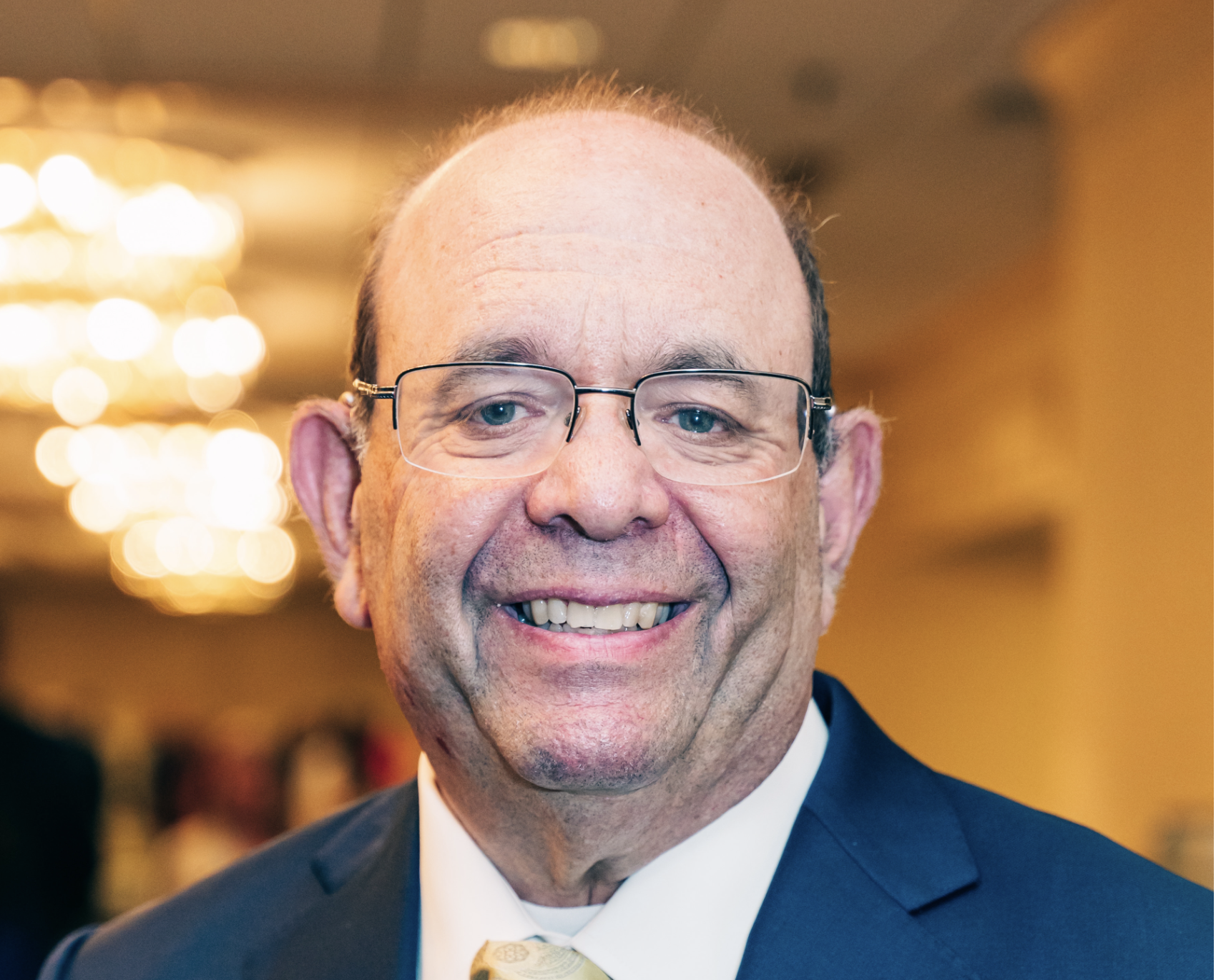
Most companies design for the majority, inadvertently excluding the roughly 70 million Americans with disabilities. Bill Taube, DMSB’78, is working to change that—drawing from personal experience to show businesses how accessibility isn’t just the right thing to do, it’s good business.
“I have what I call the 98 percent club and the two percent club,” he says while sitting in the café of the Boston Public Library in Copley Square, a community space he frequents. “What’s the 98 percent club? It’s if your company’s website is not accessible to blind people or those with visual impairment. You want to be in the two percent club because then you have a competitive advantage, and I can help you get there.”
In 2015, Taube learned he had macular degeneration, an eye disease that deteriorates the macula and impacts a person’s central vision. Following his diagnosis, Taube made it his mission to help organizations become more accessible to those with visual impairments and other disabilities.
Today, he advises companies and organizations on making everything from their websites, products, and services more accessible for those with disabilities—while encouraging them to hire individuals with disabilities to obtain new perspectives on their business model.
“Hiring those with disabilities gives organizations a perspective that they’ve been lacking,” he says. “Next time you have a candidate who uses a wheelchair or walks with a cane, consider hiring them. If you don’t, you may be at a loss.”
His work extends beyond consulting. Taube is consistently out in the Boston community, endeavoring to make the city more accessible by providing advice on everything from where to ideally install a wheelchair ramp in a retail space to how to make crosswalks safe for all.
Through these experiences, he’s able to leverage his expertise for another equally impactful role—using his network within Greater Boston to help undergraduate Northeastern students find co-op positions.
“You’re missing out as an employer if you don’t have Northeastern students,” he says. “You will find incredible students who have already been a part of nonprofits, have work experience, and some even have their own startups. They’re all really smart people.”
Though Taube’s higher education journey didn’t begin at Northeastern, he ultimately transferred to the university after learning of the professional opportunities that co-op provided students. He credits his talent for assisting students to his very own co-op experience.
During his first co-op at an accounting firm in Boston, Taube learned firsthand how powerful the Northeastern network can be. He remembers a manager pulling him aside after learning that he was a fellow Husky and offering him a promotion. “I was shocked,” he recalls. “I didn’t think I deserved it, but clearly he saw how impactful a Northeastern education was.”
Today, it’s clear that Taube is impacting communities throughout Boston—from those with disabilities to young Northeastern students looking to get their foot in the door of their chosen industry. As he surveys the current accessibility landscape, he continues to have a positive outlook on not only his profession, but his personal situation as well.
“It’s a disability, but it’s also a gift,” he says with a smile. “I connect people to people, and I like doing that. So that’s why it’s a gift, because I never would have been able to do that before. That’s what my eyesight has done for me.”